Vids Reels Maker
How we raised video export conversion rate by 30% by adding autocut Reels
• Formulating task understanding
• Discovery
• Prioritization of hypotheses and scoping together with the manager
• Prototyping, design, and animations
• Design review before release
• Monitoring metrics after release
• Product improvement after the launch
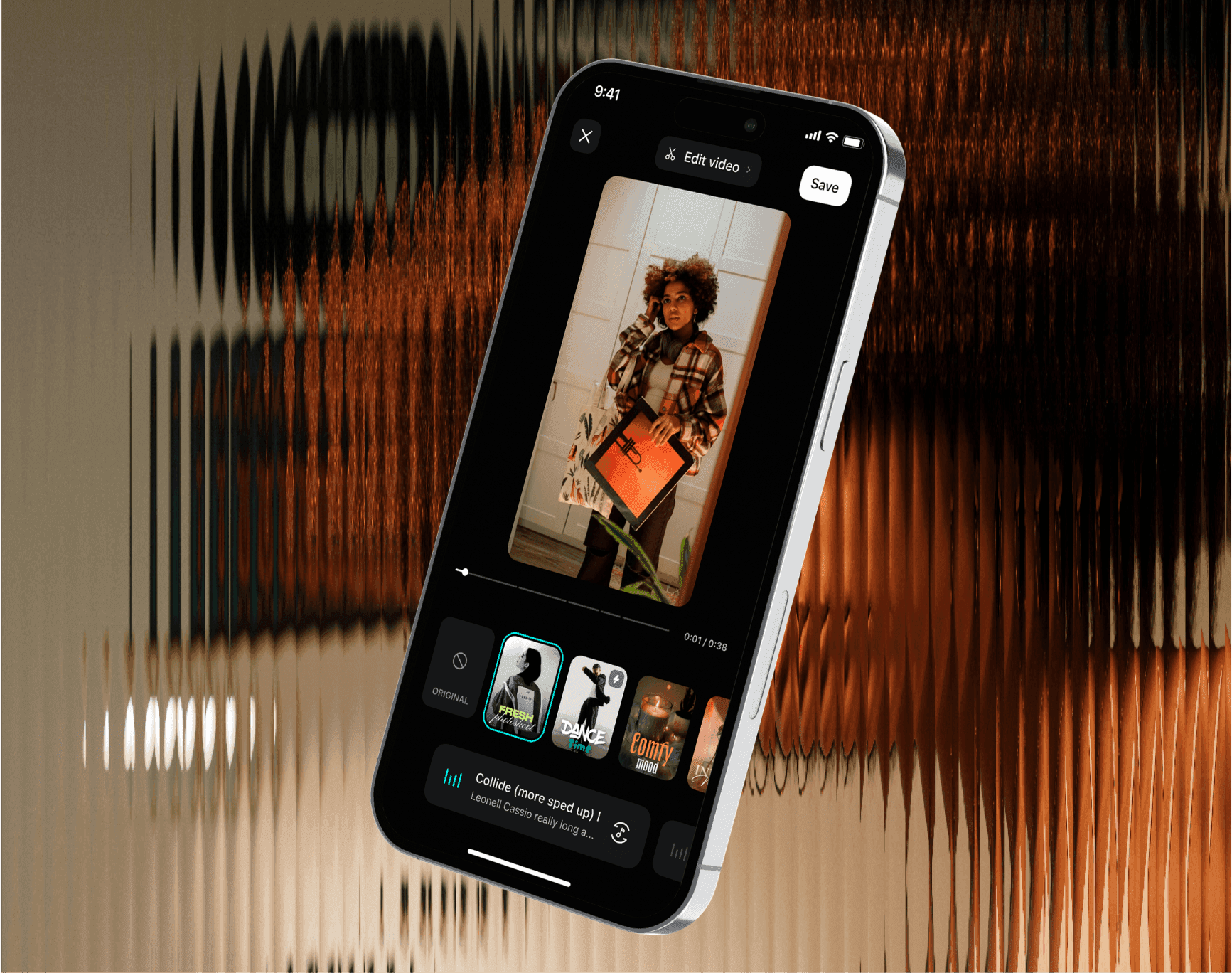
Why we work with video save and export metrics
Our app operates on a subscription model. Our key metrics are the conversion rate to trial subscriptions and the conversion rate to renewals. Loyal users are more likely to renew their subscriptions, and our main indicators of loyalty are users saving and exporting their completed videos to their gallery and the number of exports per user.
How the idea came about
Previously in Vids, there were two ways to create a video: use a template prepared by our designers or make a video from scratch. Most users choose templates because it saves time and allows them to prepare a video in 10-15 minutes. We regularly work on improving the user experience with templates and conduct tests to identify areas for improvements. After conducting a series of interviews, we found that our users lack customization options for the templates. Templates use specific effects, filters, a set number of media files and cannot be changed. Additionally, the final result with user media often didn't look as great as the reference. To try a different template, users had to exit the flow, find another template, re-upload their media, and try again.
Hypothesis
We formulated a hypothesis:
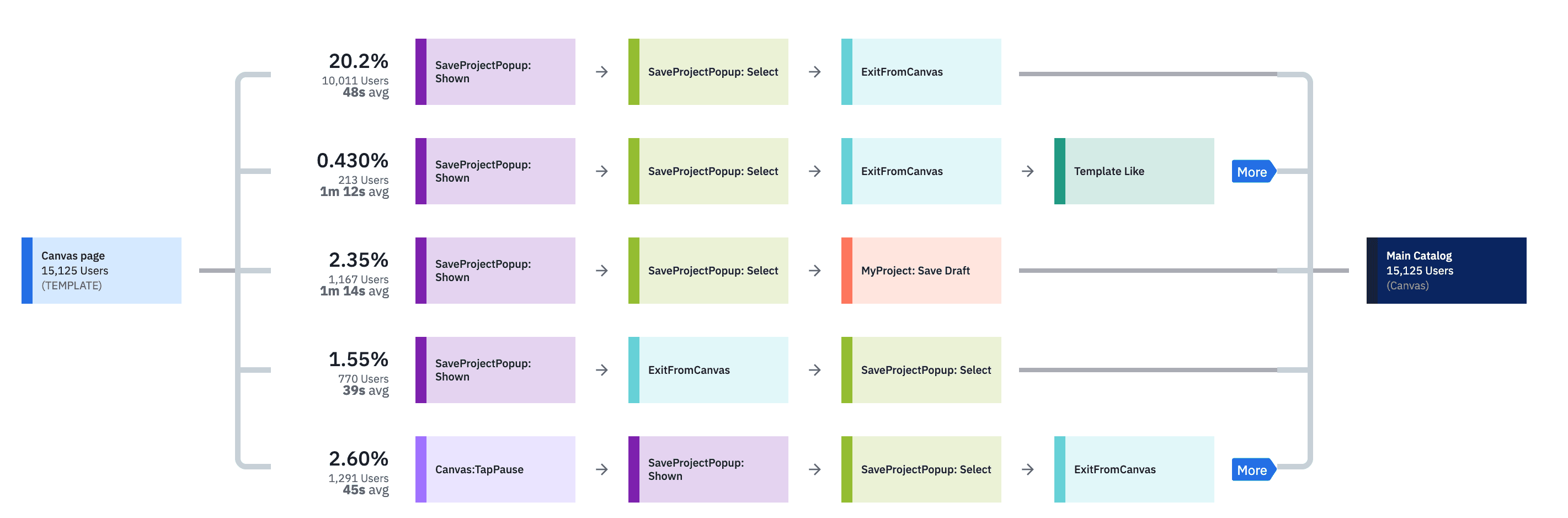
The ability to quickly switch filters and effects, as well as re-cutting videos for different tracks, will allow users to more likely achieve good results and increase export conversion. Our goal is to achieve a 10% increase in conversion. To reach this figure, we analyzed the percentage of users who start creating a video but do not save it, instead returning to the catalog and then switching to another template.
A/B to verify correct direction
Unfortunately, adding the capability for full customization in templates is technically impossible for us. We understood that we would need to create a new tool. However, to ensure that we are moving in the right direction, we conducted 2 A/B tests in our templates.
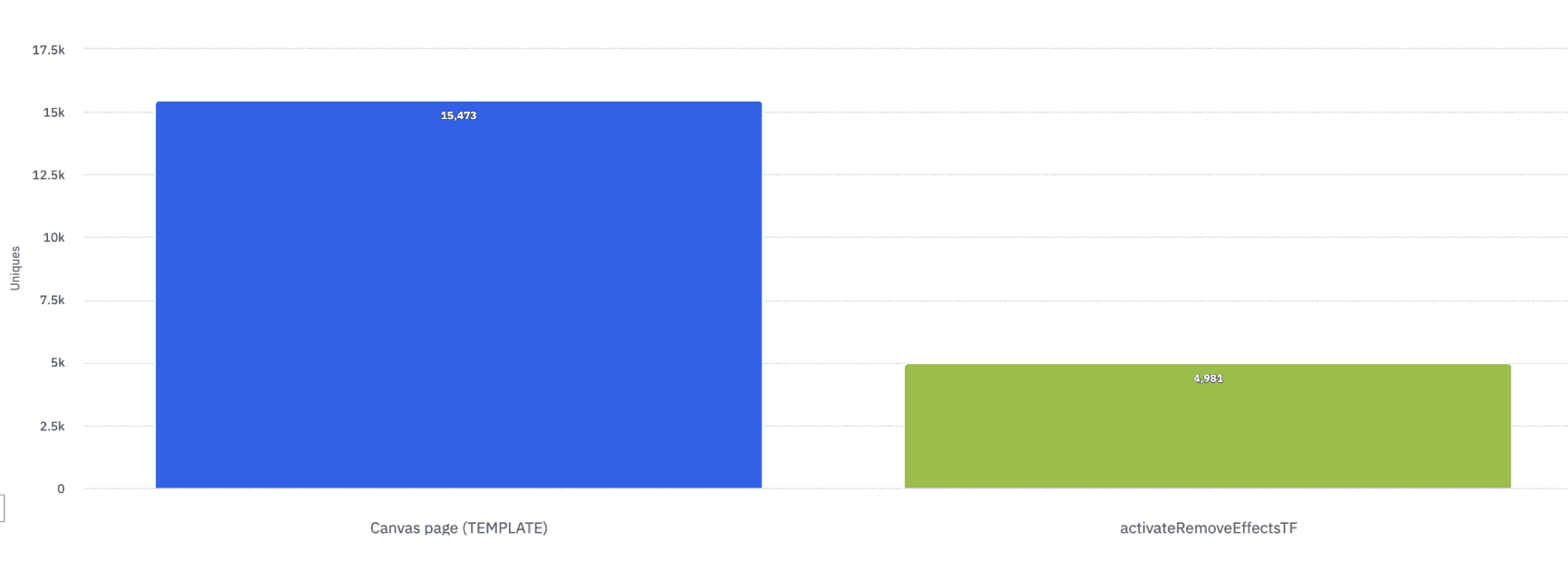
Test 1. We added the ability to completely disable or enable effects. This allowed us to test whether users find it relevant to edit their videos to music without using additional effects. The feature showed demand: according to the results of the test, 34% of unique users activated the feature, and 48% of those who activated it saved videos without effects. It did not significantly impact overall export conversion, but it's important to note that there were no differences in subscription conversion and ARPU between both groups.
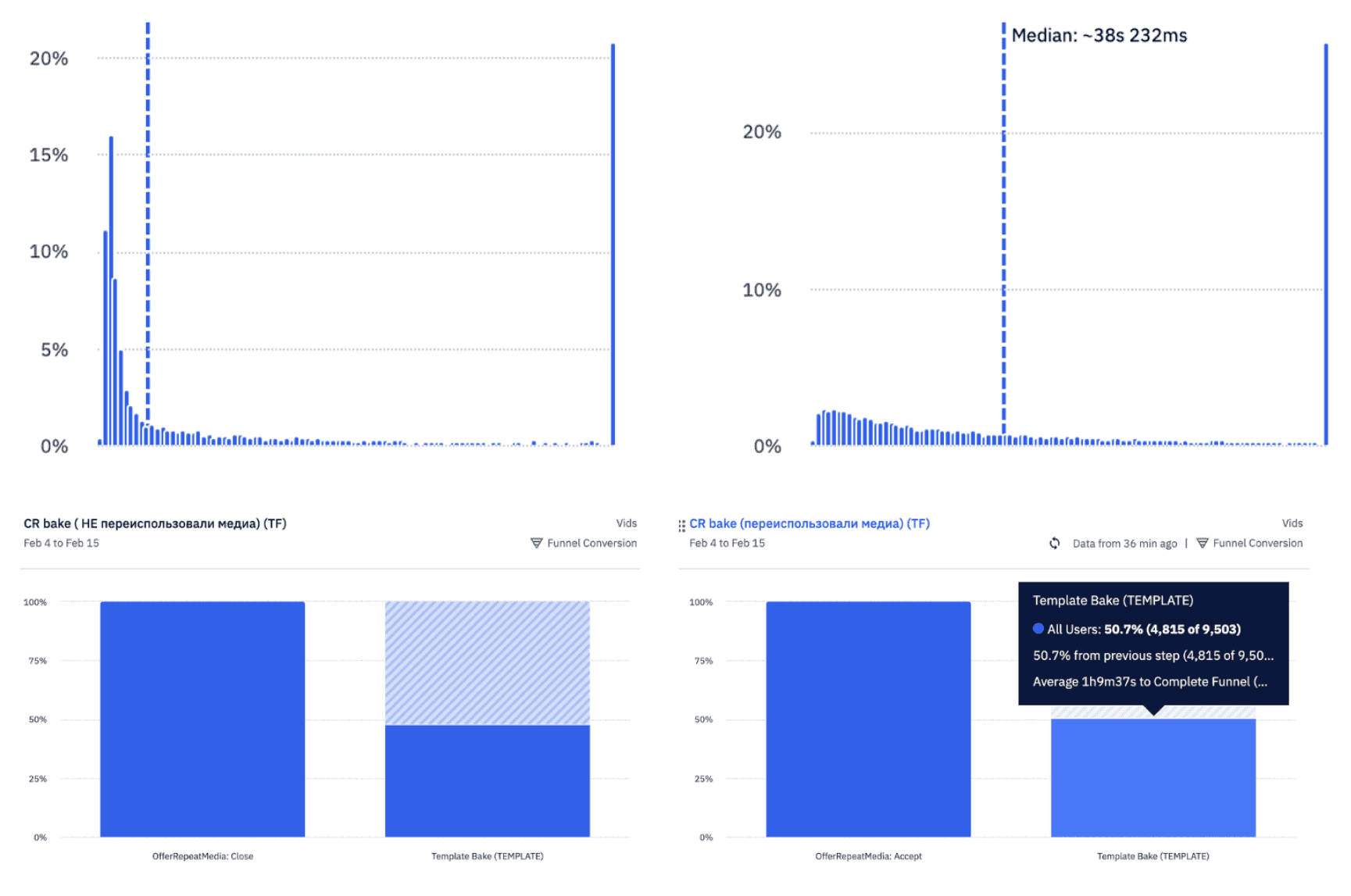
Test 2. We added the ability to reuse previously selected media when switching between templates. In group B, the picker speed increased threefold, and the median time spent decreased from 38 seconds to 11 seconds. Additionally, a notable result was that those who reused media had a 5% higher conversion rate to export.
Reels Maker
The tests confirmed the relevance of creating a new tool. If we give users the opportunity to create reels based on content rather than templates and allow them to quickly try different options, then they are more likely to be satisfied with the result obtained, and the number of video uploads and saves will increase.
Our competitors have similar tools called auto-cut for Reels.
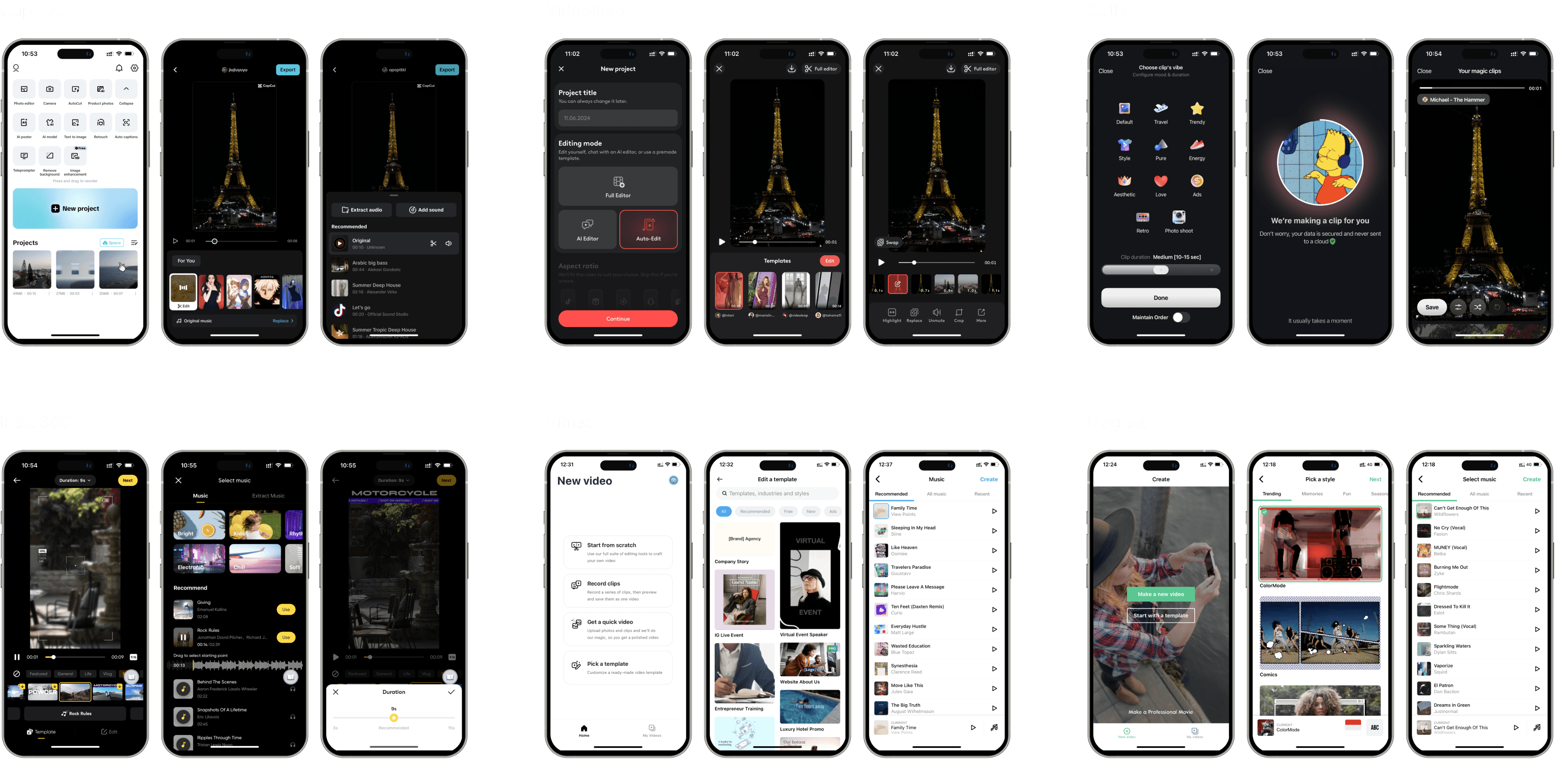
Based on the previously obtained data and competitors' experience, we prioritized the features as follows.
Must have
• The ability to quickly test different options: switch tracks and presets to get new Reels
• Make the path to the result as easy as possible: no loaders throughout the flow until saving
Nice to have
• Autobeat to user-added tracks
• Music and preset collections based on the mood of the media added by the user
• AI-driven selection of relevant media segments added by the user
Prototyping
I created a prototype of the feature and went to discuss it with the team and test it with corridor tests. The idea was to implement the tool as simply as possible and reuse existing entities.
I placed the entry point at + button — previously this button led to the canvas and "Start from scratch". Splitting into two flows will allow us to more accurately track whether users understand where they are going and measure transitions between the "From scratch" flow and the "Auto-cut" flow.
Inside, users can switch between presets and tracks, save the final result, or move to the full editor for more precise adjustments.
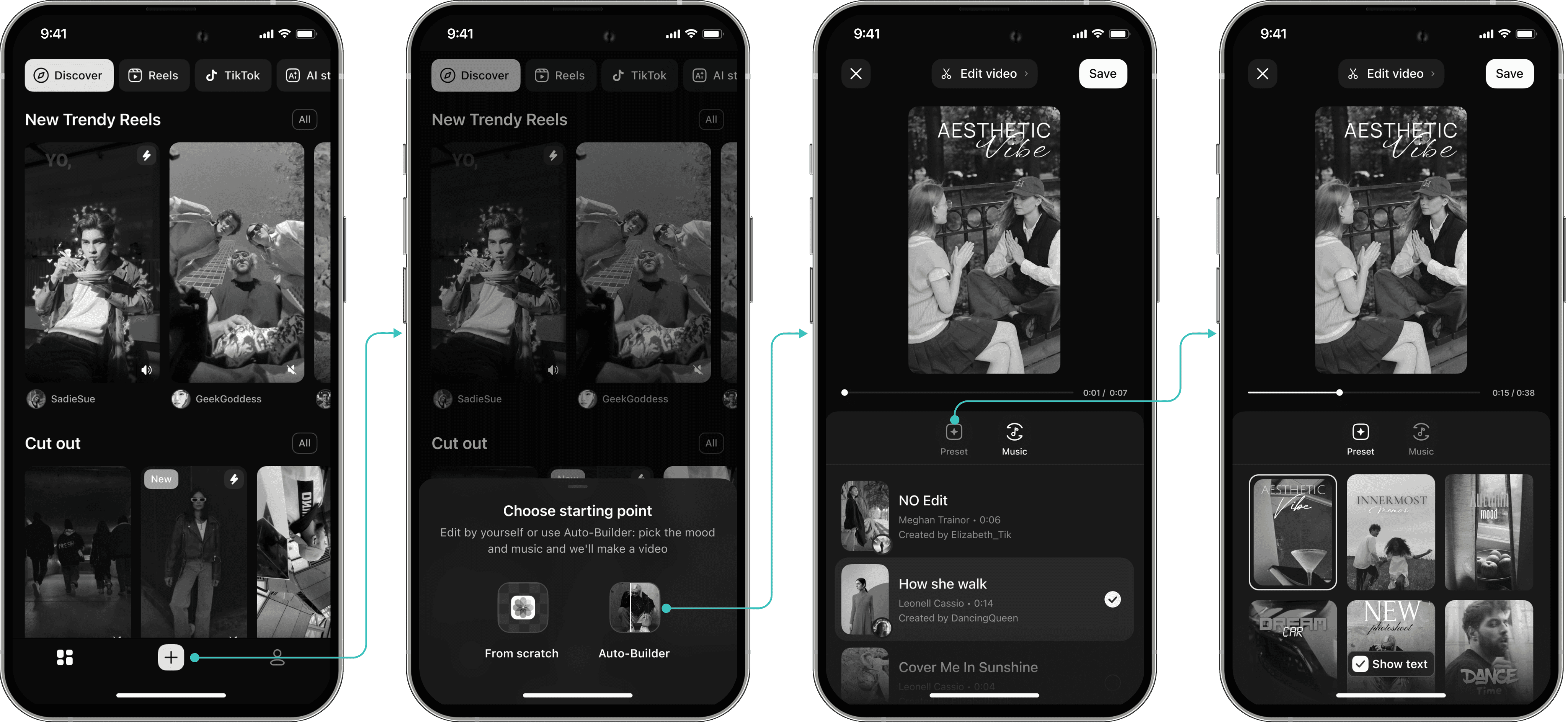
While testing, I noticed the following drawbacks of this approach:
• The title and entry point are unclear.
• Switching tabs to change music and template requires users to take additional actions, contradicting the initial idea of a simple flow and quick results.
• The preset text rarely fits the user's video perfectly, and adding an additional editor would complicate the flow.
First iteration design
Based on the feedback collected, I prepared the design that we proceeded to release with.
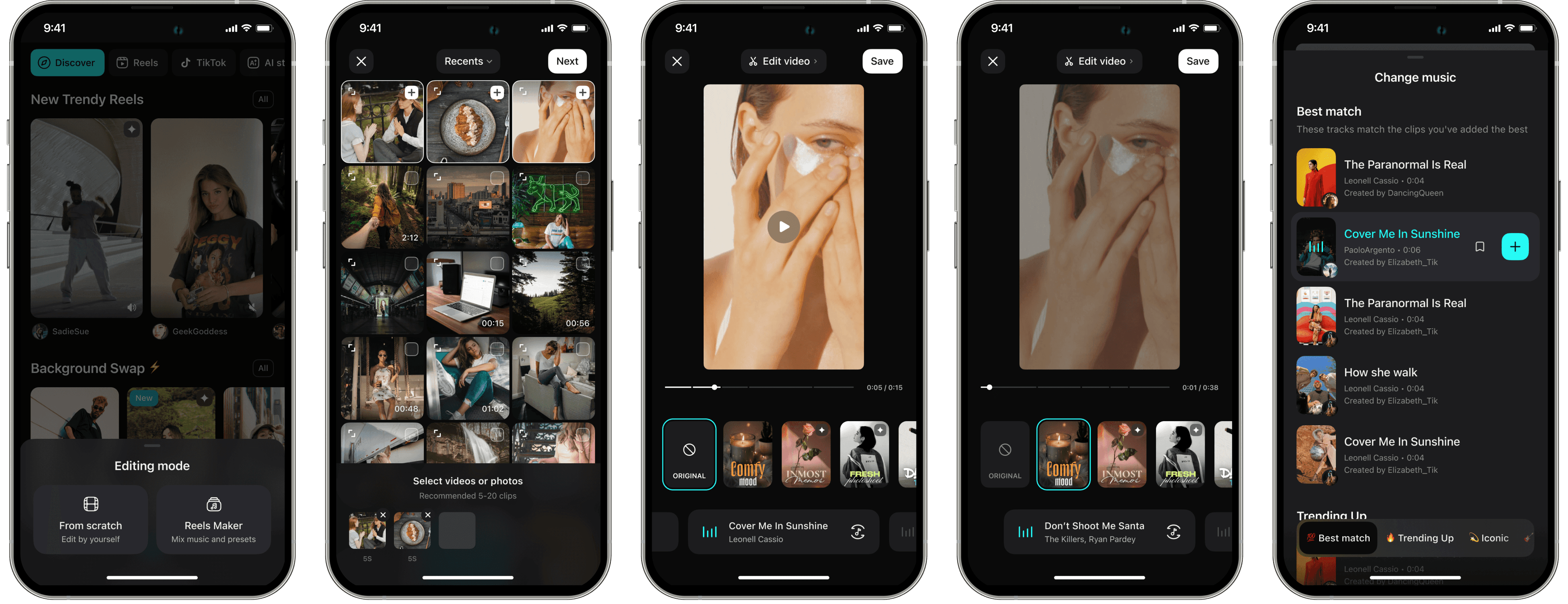
Release and first results
In December 2023, we released the new tool. A month later, we collected and analyzed the metrics. 35% of users activated the new tool, which is excellent and shows user interest. With the launch of the new tool, the conversion rate to saving videos from the editor increased by 30%, but it still lagged behind Templates flow - 19% compared to 44%.
We also noted interesting points: only 15% of users saved videos directly from Reels Maker, while 44% switched to the full editor. Additionally, we observed that 23% of users do not use presets.
We saw a positive but insufficient impact of Reels Maker on the overall video saving conversion, and there remained significant potential for growth.
CSAT survey
In December 2023, we released. Alongside gathering post-launch metrics, we initiated a CSAT survey after users completed the Reels Maker flow. We received decent results: Excellent = 40%, So-so = 40%, Bad = 20%. However, the distribution of ratings also indicated room for improvement. The most common criticisms that were repeated in the CSAT survey were too short tracks and not enough editing and customization options
User interviews
In Q1 2024, we started with a series of interviews with users. Seeing that Reels Maker has potential for improvement, I included a section in our interview script specifically focused on questions about Reels Maker.
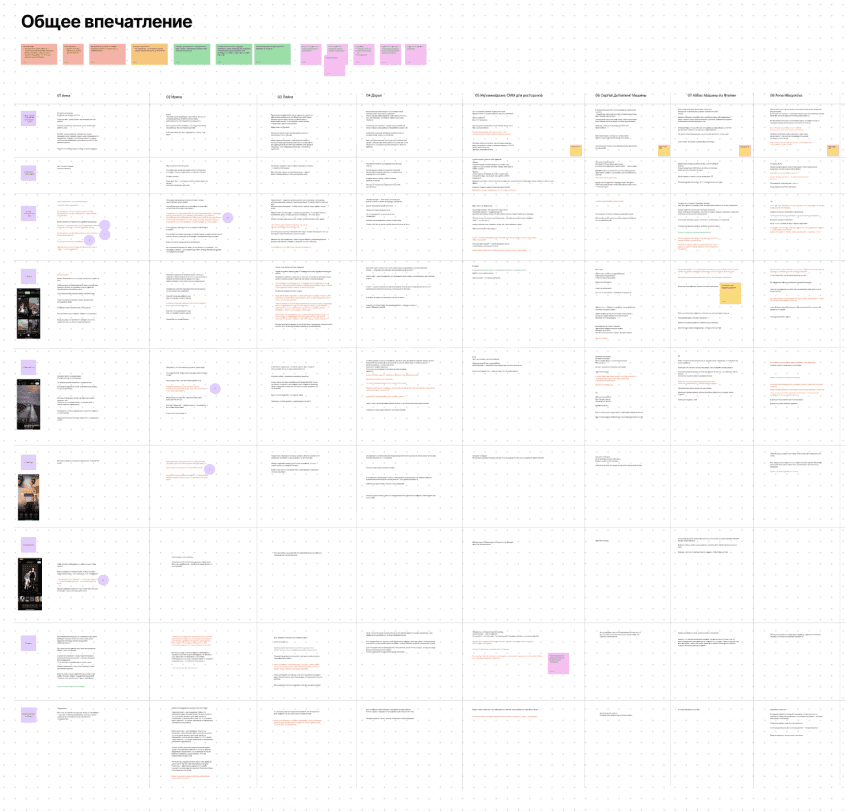
I conducted 16 interviews, from which the following conclusions were drawn regarding Reels Maker:
All our app advertising and promotion is positioned through templates. Users are not even aware that we have other tools, and existing entry points reinforce this perception. However, when users discover the tool, they appreciate its convenience and the ability to accomplish their tasks through it.
Users rarely use presets because they often have their own blogging style that is difficult to match with accentuated effects. Filters or color correction would be more relevant.
During testing the tool, users typically add only 1-2 media items, which prevents them from fully experiencing the benefits of automatic video generation and reassembly.
Second iteration
In May 2024, we introduced the capability to implement a more engaging video creation logic. Our ML team developed an algorithm that uses AI to analyze user-added media, selecting the most interesting segments. Additionally, this allowed us to add auto-fit: now, we could remove restrictions on track length and enable users to use any self-uploaded track or longer versions from collections.
Having prepared the new video generation logic and using data from interviews, CSAT surveys, and metrics, I designed the second iteration of Reels Maker.
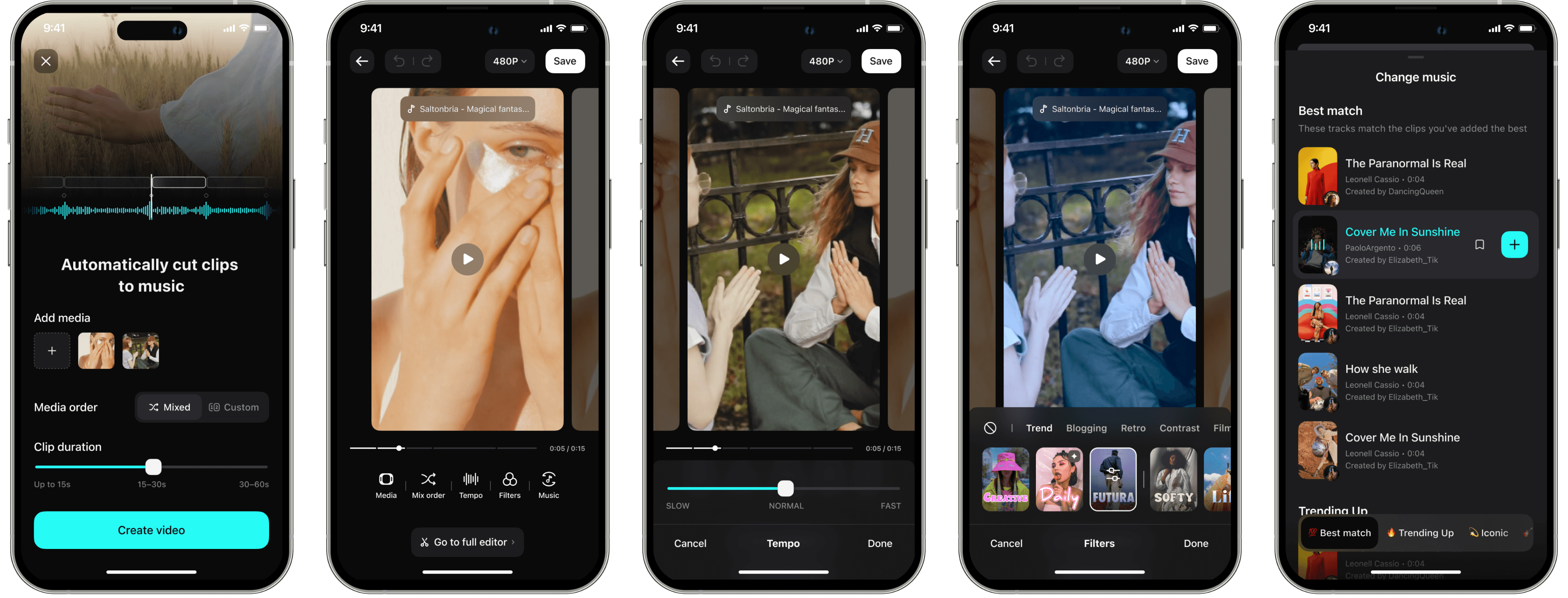
What I changed:
• Added a screen before the tool. It serves as both onboarding (a video showcasing the tool's capabilities) and allows more precise initial setup of desired parameters: selecting media duration and order.
• Added tools for selecting specific video segments and adjusting the cutting pace.
• Changed the method of switching Reels. Previously, users had to swipe through cards of music, and some users didn't notice that it affected Reel cutting. Now, videos themselves are scrolled through, making it more obvious that each time we assemble a new video for the user.
What about Reels Maker now
We have increased the conversion rate for saving videos by 30%, which is twice our initial goal. However, we understand that the tool still has potential, and we anticipate metric growth with the launch of the second iteration. We released the new version in July 2024, initiated an A/B test, and are currently gathering results.