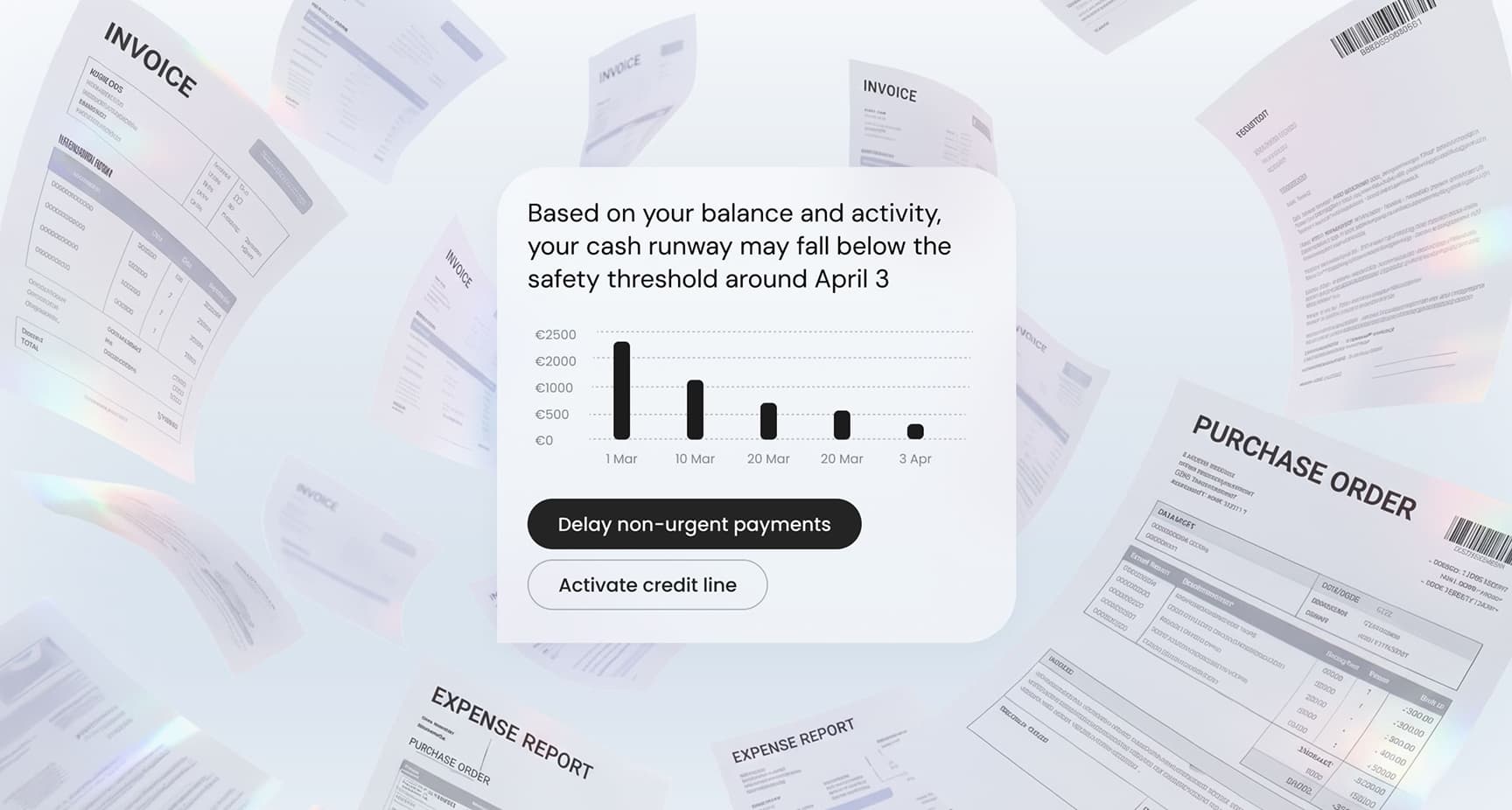
Launching Finom AI
Building a financial assistant for entrepreneurs from 0→1
Starting from zero
In 2025, I joined the newly formed Finom AI team to design a financial assistant for entrepreneurs across web and mobile.
The vision was to reduce financial routine, anticipate risks and eventually act on the user’s behalf. Our North Star measured users who initiated, scheduled or automated at least one weekly payment through Finom AI for four consecutive weeks.
Step 1: Researching trust, expectations and opportunities
Since Finom AI was built from scratch, the project began with research to align the product vision with real customer needs. In a financial product, trust was critical, so I explored what entrepreneurs expected from AI and which tasks they were willing to delegate.
The research started with exploratory interviews about how users imagined AI in banking, what they wanted it to do and where they would hesitate to trust it.
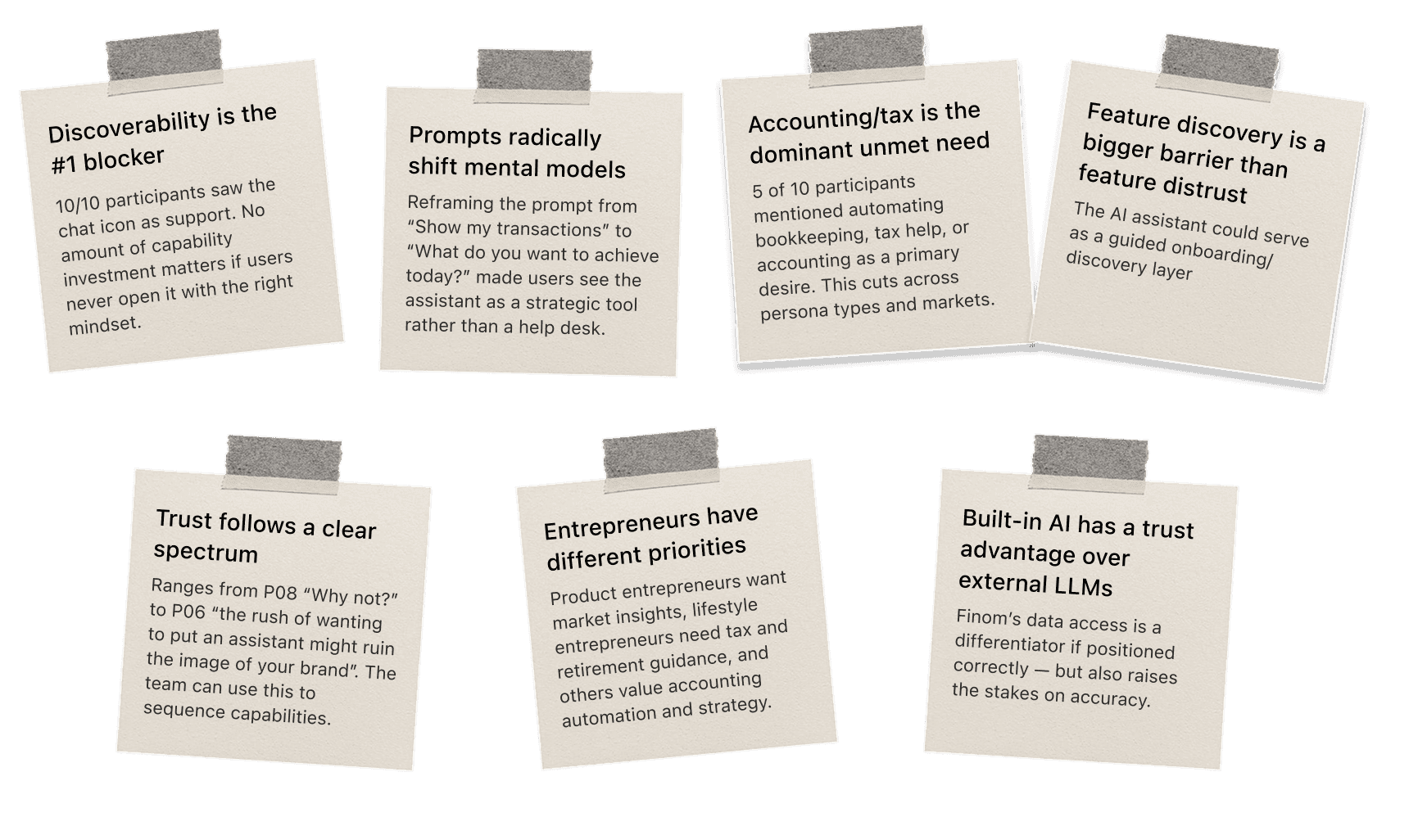
Next, we ran customer workshops focused on one question: Which jobs would you be willing to delegate to AI? This helped us identify the most valuable use cases and define what could become a true killer feature.
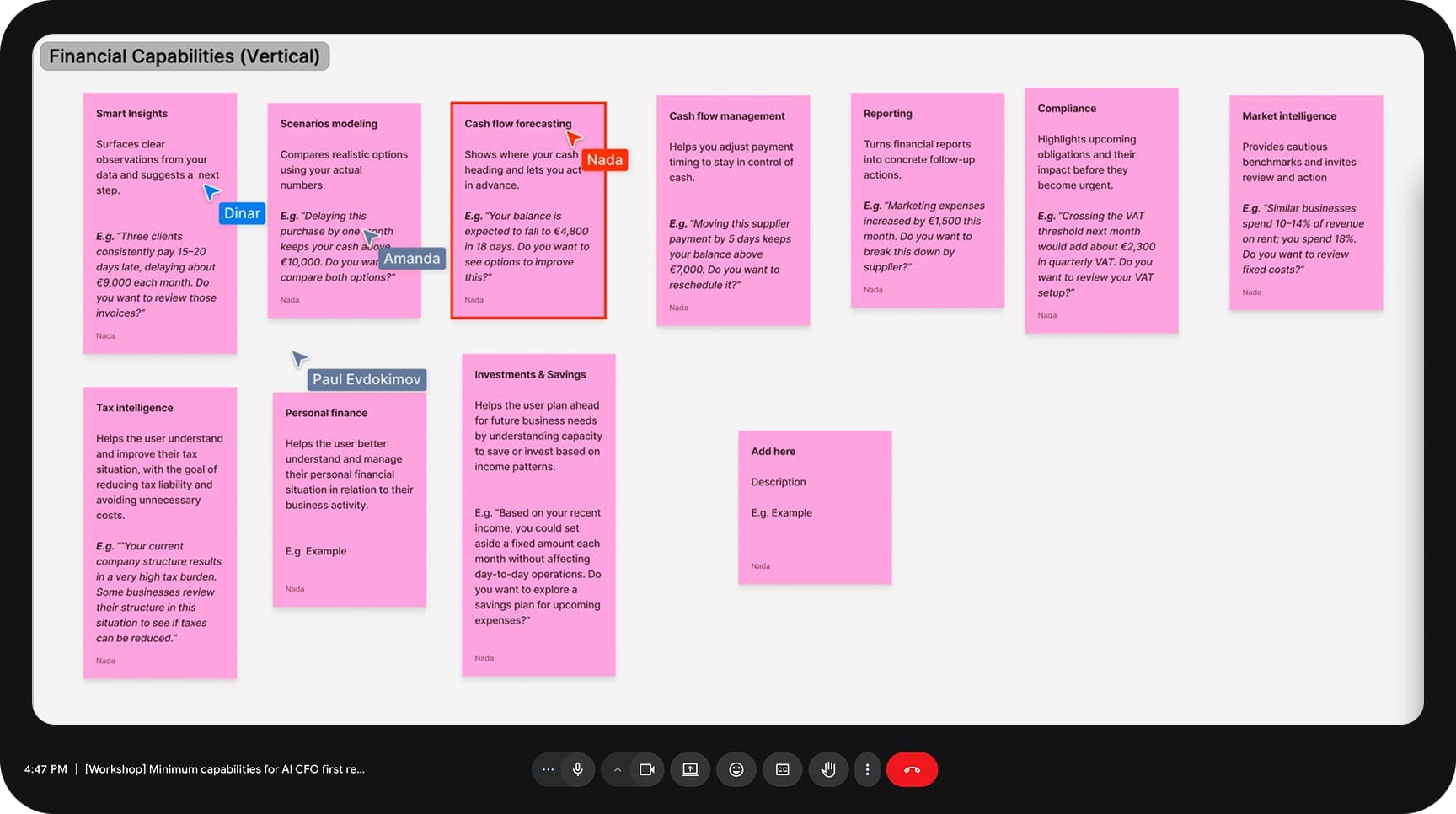
Finally, we worked with each product domain to map which capabilities could be exposed through MCPs and brought into the assistant. This connected customer demand with technical feasibility and shaped the first roadmap for Finom AI. The main insight was clear: users did not need another chatbot. They wanted an assistant that could understand their business context, reduce routine work and gradually take action on their behalf.
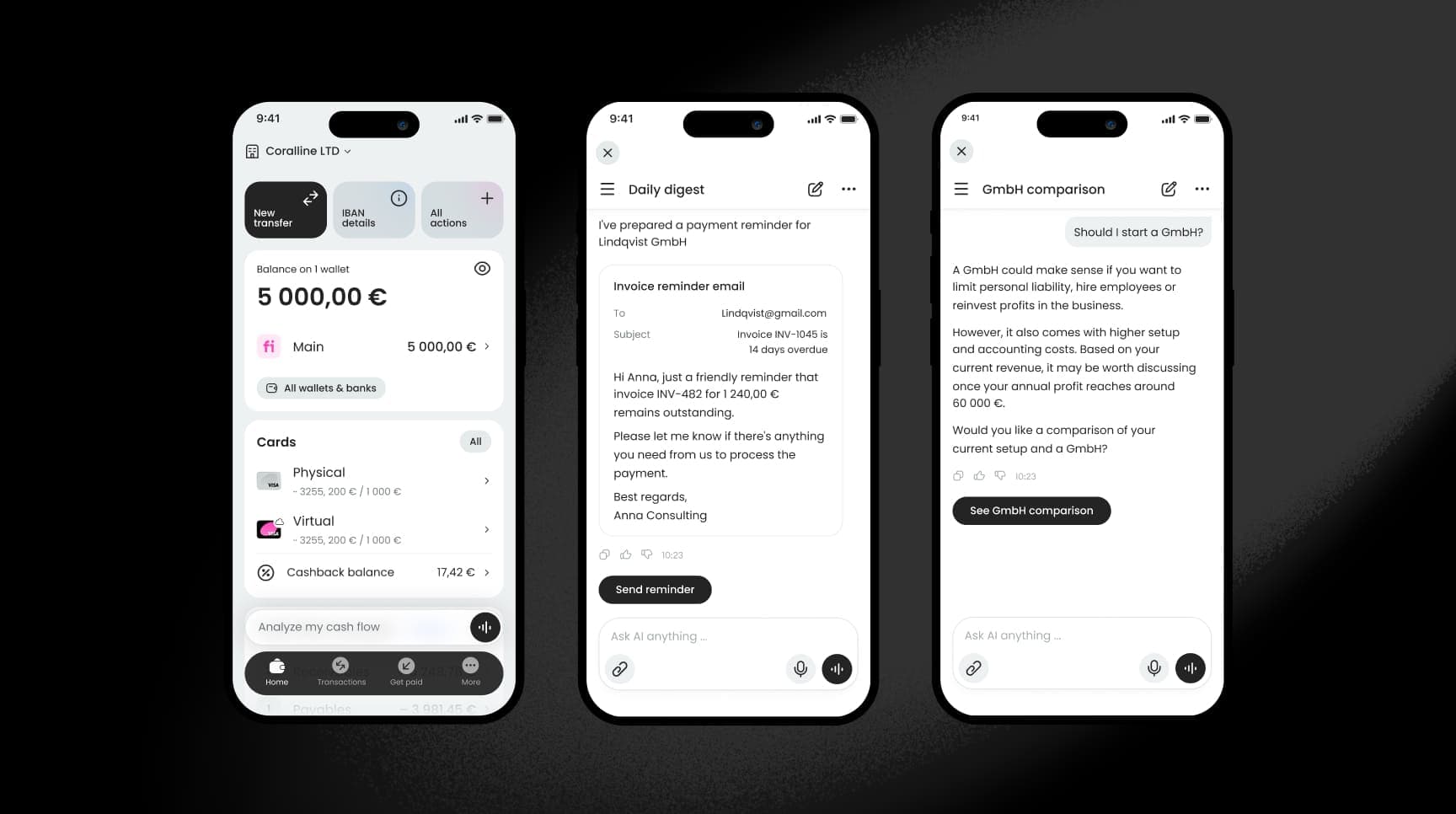
Differentiating the launch through voice
With the first release centred around chat, we needed a clear way to differentiate Finom AI from competitors such as Revolut AIR and Qonto. I designed one-tap dictation and voice interactions as a faster, more natural way for busy entrepreneurs to communicate with their financial assistant.
Dictation became a key differentiator of the pan-European launch on June 30, 2026, featured directly in the press release headline as “by text and one-tap dictation.” It helped position Finom AI not as another banking chatbot, but as an assistant designed for quick, everyday financial work.
Step 3: From answers to actions
The next goal was to move Finom AI out of beta, reach 10,000 monthly active users and expand it beyond a question-answering interface.
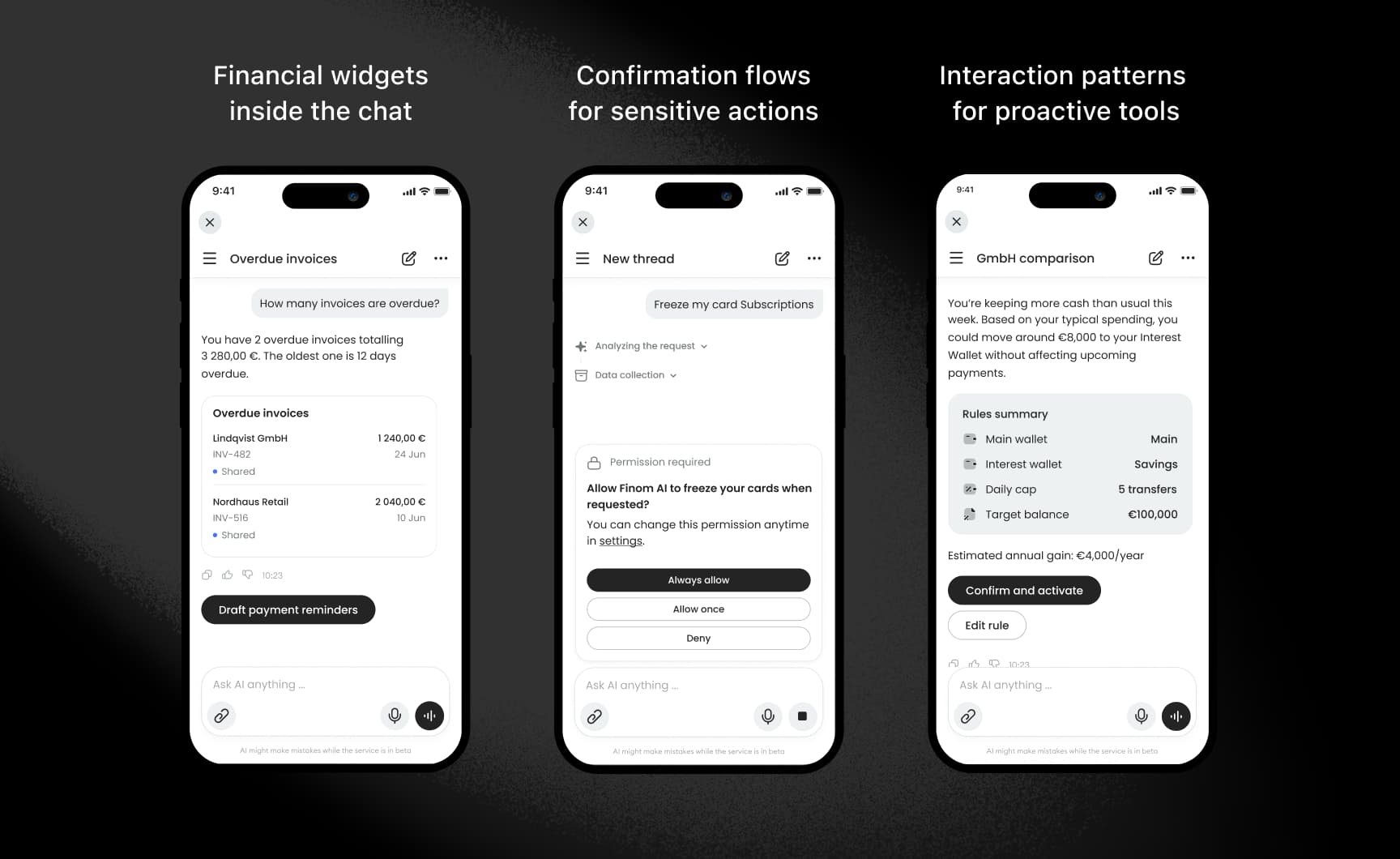
The product introduced read tools across core financial domains and started preparing write tools and skills, allowing the assistant to perform specific tasks.
From the design side, I worked on:
Early results
Finom AI launched publicly on June 30, 2026, followed by a rapid phased rollout across Europe.
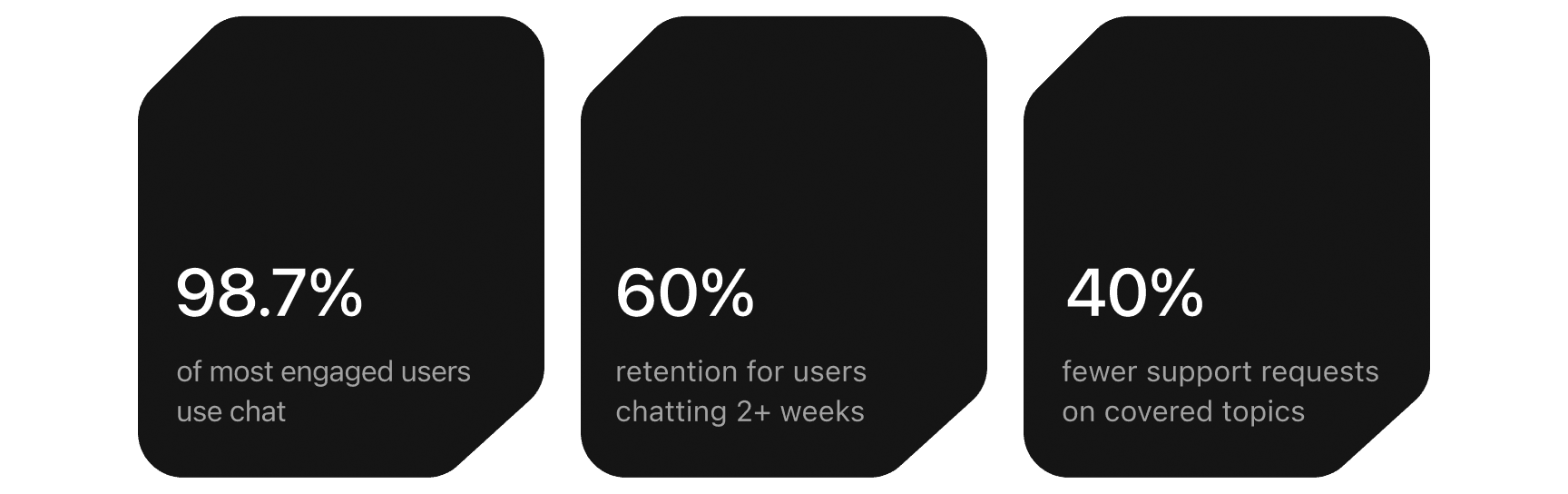
Early data showed that chat became a core part of the product experience: 98.7% of the most engaged users used it, while users who chatted for two or more weeks retained at approximately 60%, compared with 2–5% among non-chat users.
Chat users also reached key milestones 3.4 times faster, while support requests on topics covered by Finom AI decreased by approximately 40%.
My reflection
After six months of designing Finom AI, I reflected on how working with AI changed my approach to product design, from handling unpredictable responses to designing for trust, transparency and user control.
I captured the key lessons from this experience in an article, which you can read here: article on Medium.